Guide
How to Take Notes on a Book While You Read
To take notes on a book, mark only the passages you may want to come back to, then write a line or two in your own words with a page reference. Keep the notes together in one place, and review them after you finish the book. The steps below cover where to keep reading notes, what to mark, how to turn a highlight into a note, and how to build a commonplace book.
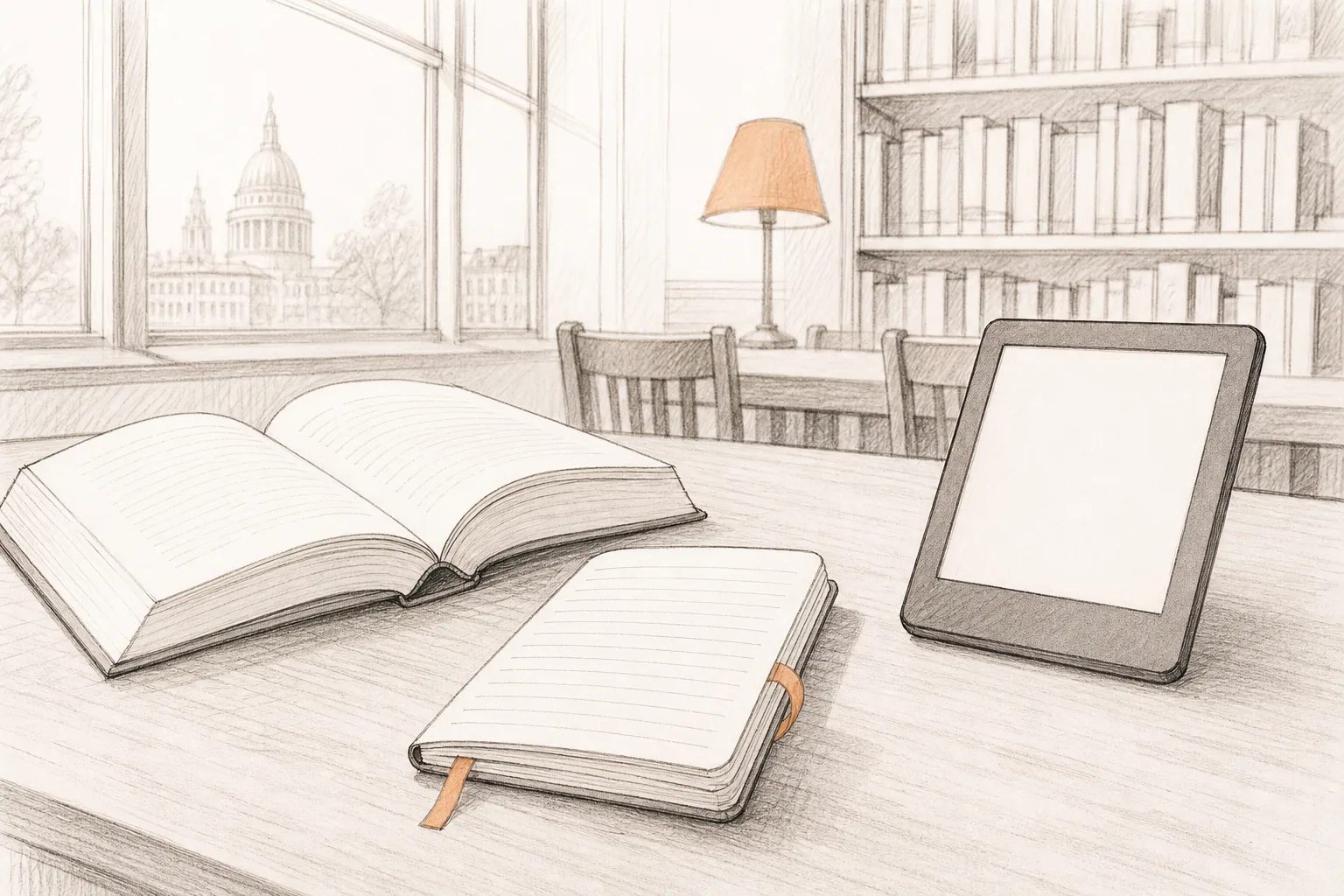
Where should I keep my reading notes?
Pick a place that lets you keep reading without turning each pause into a filing task. The right setup depends on the book and how you read.
- A printed book: Use a small notebook, or a sheet of paper tucked inside the cover. Leave space beside each note for a page number. If you own the book, you can also mark the margins or use page flags.
- An e-reader: Use its highlight and note tools. Kindle lets readers save highlights, and Apple Books lets you highlight, underline and add notes. Move only the ideas you want to keep into your main notes later.
- A notes app: Save the book title and author with your notes. One searchable place works well if you read across print and digital.
Paper has a real advantage: you can write a page number without switching away from the book. If you don't want to type up a notebook later, capture a short note in an app as you read. Saving now and sorting later is the idea behind append and review. Add the book's title and author to your first entry, so a quote turning up months later still has a source.
What should I mark while reading?
Mark a passage when it gives you a reason to stop: it explains a point clearly, challenges something you believe or gives you an idea you may use. Don't highlight whole pages because they feel important. A mark should point to a thought you want to examine or recall.
Try a test before you mark anything: say why this passage caught your attention. If you can't, keep reading. You can return to the chapter, but a page full of highlights won't tell you which lines mattered.
A light set of marks helps you read without stopping. Underline a key claim, put a question mark beside a point you doubt, and a star beside a line you want to quote. Keep each mark's meaning simple and consistent, and write the explanation in your notes after the section. In an ebook, select just the words you need.
A novel may only need a line, scene or name you want to remember. A textbook needs a claim, a term or an example that explains the chapter. The type of book changes what you save and the rule stays the same: mark less, and make each mark count.
How do I turn a highlight into a note?
A highlight points to the author's words, and a note adds your thinking. After marking a passage, pause at the end of the paragraph or section and write one or two lines about what you understood, felt or questioned. These prompts make it easier to start:
- A surprise: the idea that changed how I saw the topic.
- A disagreement: the claim I would challenge, and why.
- A use: where I could apply this.
- A connection: what this reminds me of from another book or my own life.
Instead of copying a full passage about attention, write: "The author links focus to choosing one task at a time. I want to test this before my next writing session (p. 84)." Now the note carries the idea and your response, not just a block of someone else's text.
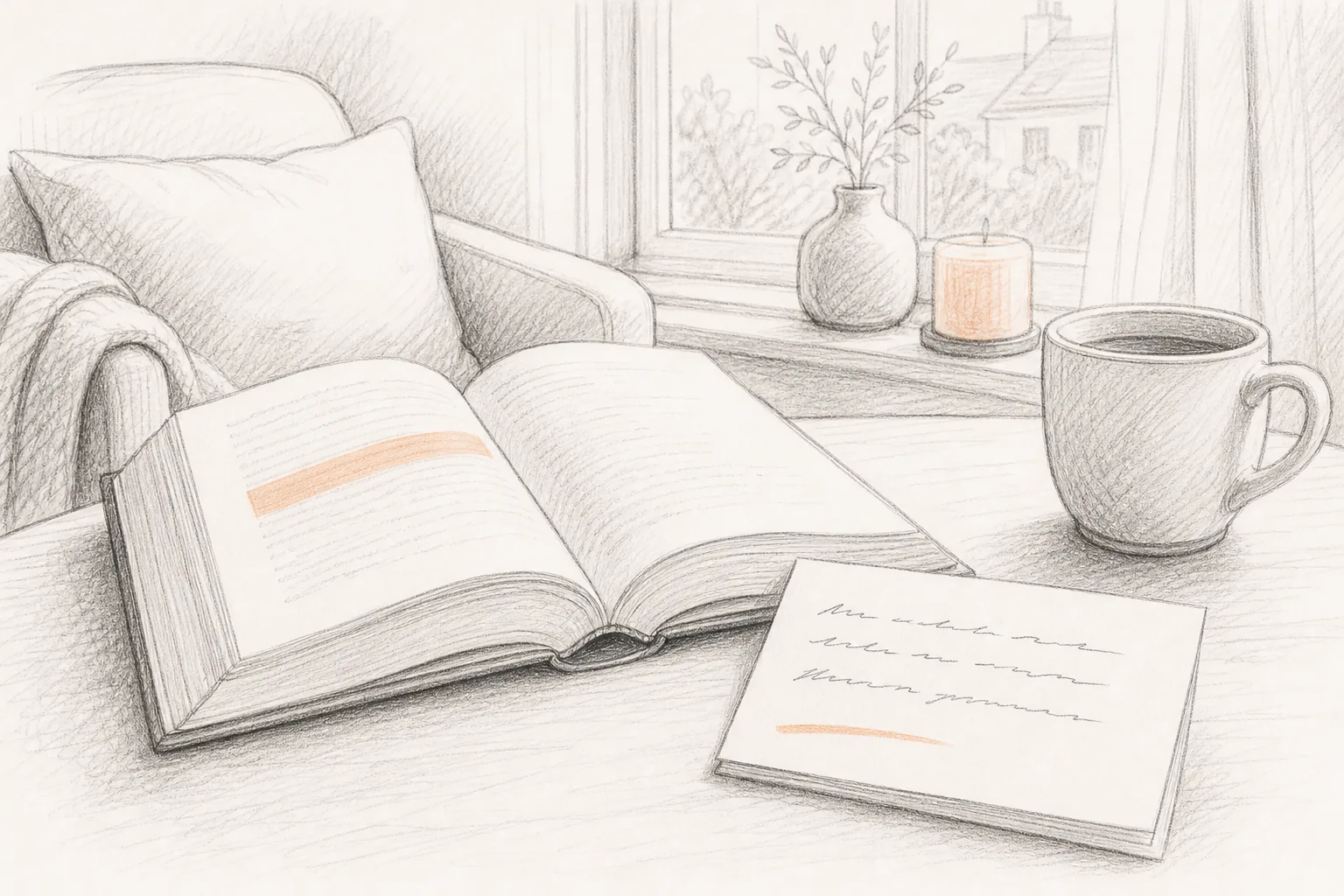
Keep exact quotes only when the wording matters, such as a line you may cite, and put quotation marks around copied words. For a paraphrase, use your own phrasing and keep the reference so you can check the original context.
Don't force a note after every page. One sentence after a chapter, or a question beside one paragraph, is plenty. If a passage has no clear meaning yet, leave it marked and come back at review.
I use Gravity for this. Each entry is a short note in one list, and I start it with read: so I can find it by searching for that prefix. The share sheet lets me send a selected passage from another app straight in, and search works offline. How I capture and search has more. A prefix like read: is the only structure these notes get.
How do I review my notes and build a commonplace book?
After finishing a book, set aside a short session to review what you marked. A commonplace book is one place for ideas, quotes and observations you want to keep across different books. It can be a paper notebook or a searchable digital collection.
Check each highlight against the page or chapter and drop marks that no longer seem useful. Then write a brief book note with the title, author and the main idea you want to remember, plus a few of your strongest responses, questions or quotes with page references. Don't copy every highlight into your long-term notes. A quote without your own response is hard to understand later, so add a line on why you saved it or what it connects to.
On paper, use one notebook and write the book title beside each group of notes. Digitally, put the title and author in each entry or in a short book summary. A prefix such as read: makes the collection easy to search, and a topic word helps you find ideas that recur across books.
Review within a week of finishing, while the argument and your reactions are fresh. Some readers wait a few days to see which ideas stuck. Either way, keep the review small. It isn't a second attempt to rewrite the book. A regular weekly review is a good home for it.
Frequently asked questions
Should I write in my books when I read?
If you own the book and marking the pages helps you think, yes. Underline a short passage or add a brief margin note, then record the page number. If you're borrowing the book or like clean pages, use flags, a separate notebook or the ebook's highlight tool.
How many notes should I take while reading?
Enough to remember the ideas that matter to you, and not every point in the book. A few well-chosen notes per chapter may be plenty, and some chapters may need none. If your notes start to look like a copy of the book, add your own response instead.
How do I take notes on a book without stopping too often?
Mark a passage with a quick underline or highlight and keep reading. At the end of a section, jot a short response and its page number. That stops you switching between reading and typing after every paragraph.
What should I include in a book note?
The title and author, a short statement of the idea, your response and a page or chapter reference. Add a direct quote only when the exact words matter. A line about what surprised you or how you might use the idea makes it more useful than a plain summary.