Blog
How to Do a Brain Dump: A Simple 5-Step Method
A brain dump means writing down everything on your mind, without sorting or judging it as you go. Set a timer for 10 to 15 minutes, write until it rings, then sort what you wrote into things to do, things to park, ideas to keep and things to drop. Below are the five steps in order, with an example list and the mistakes that make the exercise stall.
I'm Tristan, and I make Gravity, a notes app built around quick capture. A brain dump needs a page and a timer, so I've kept the app out of the way until it's useful.
Where should I do a brain dump?
Pick the place before you start. A sheet of paper, a notebook or a notes app all work. The right one is whichever you can open without setting anything up.
Paper suits you if you want a break from screens. A digital note is better when thoughts turn up away from your desk. If speaking is easier than writing, record a voice memo and type it up afterwards, or let BrainFlow, which I made for this, write the recording up as a note with the tasks pulled out. Whichever you choose, use one place per session so your thoughts don't scatter across scraps and apps.
Timing depends on what you're trying to clear. A short session before bed catches reminders you'd otherwise rehearse in the dark. A weekly session gathers loose ends before you plan the days ahead. If you're overwhelmed right now, start now and skip the wait for a calmer week.
How long should a brain dump take?
Set a timer for 10 to 15 minutes. That gives the session a clear end, so you aren't waiting for your mind to feel completely empty. You're collecting what comes up, not auditing your life.
After a long gap you may need the full 15 minutes. A few thoughts before bed may take 10. Stop when the timer rings even if the list feels unfinished, because the rest can go in your next session.
If you run out of things to write early, run through the areas of your life: home, work, messages you owe, plans coming up, ideas you haven't acted on. Write whatever surfaces and keep moving.
What do I write down?
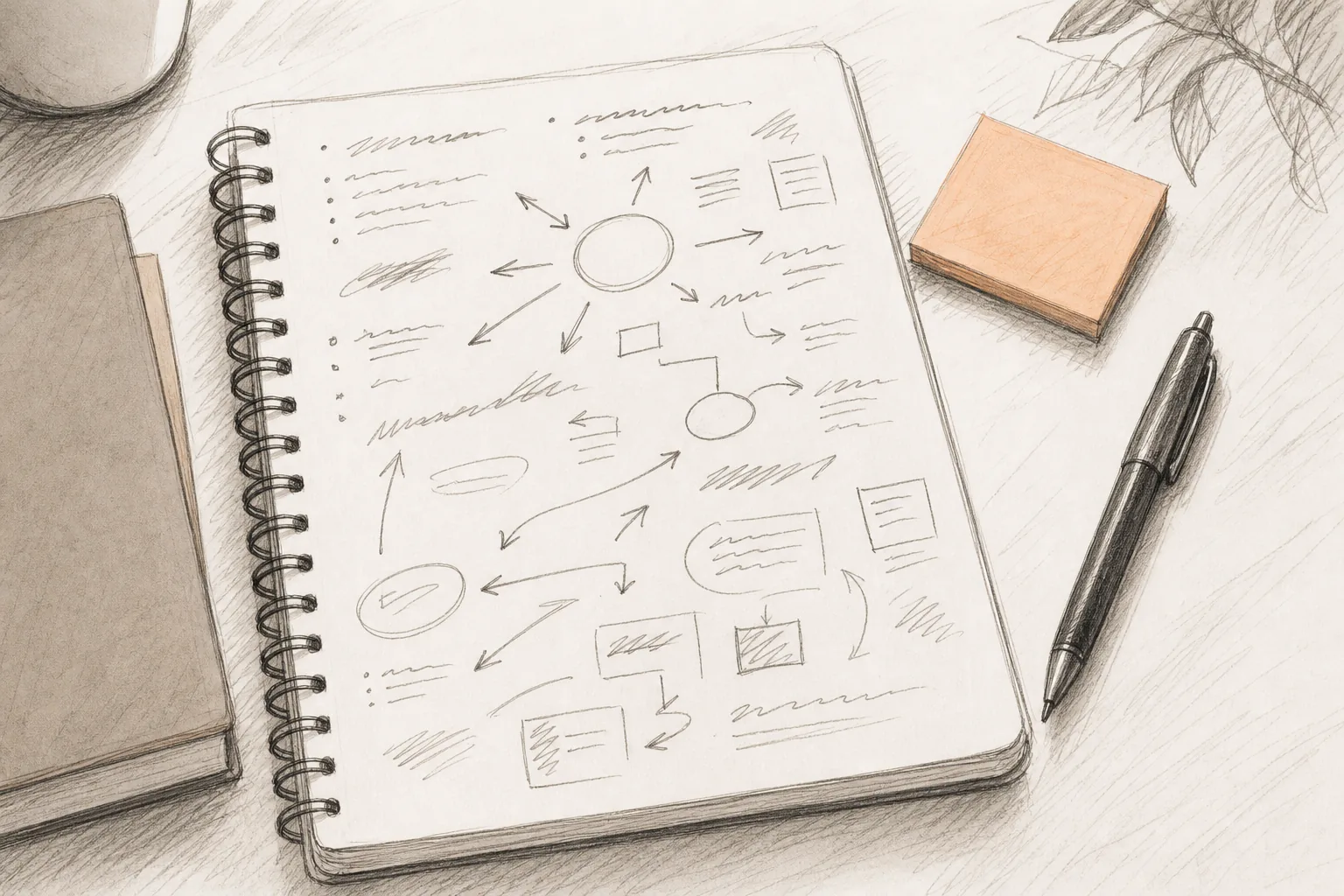
Write whatever is on your mind, in the order it arrives. Tasks, worries, ideas, reminders and half-formed thoughts all go on the same page. Skip headings, and don't rank anything by urgency.
A short, messy list looks like this:
- Send the draft to Maya
- Kitchen tap is still dripping
- Worried I'll miss the renewal date
- Idea for a shared book list
- Ask Sam about Saturday
- Annoyed about the meeting
Tasks and feelings don't arrive in tidy groups, so don't separate them yet. Fragments are fine. "That thing I need to check" is more useful than sitting still while you hunt for the exact name. If you catch yourself editing a line, leave it rough and move on.
Don't act on anything mid-session either. If you write "renewal date", resist opening your calendar. Capture it and go back to the page, or the session turns into an hour of admin and you lose the thoughts still waiting.
If something painful comes up, a short note about it is enough. A brain dump isn't therapy, and you don't have to keep the page. Some people recycle the paper afterwards. With a digital note, delete it when you're ready.
How do I sort a brain dump?
When the timer stops, read the list from the top and decide what each item needs. Keep this pass short. Four groups cover most of it:
- Actions: something you can do, with a next step you can name.
- Worries to park: a concern you can't solve right now, or one that needs more information.
- Ideas to keep: something you may want to explore later.
- Things to drop: an item that no longer matters or isn't yours to carry.

In the example above, "Send the draft to Maya" is an action. "Kitchen tap is still dripping" becomes "ask the landlord about the tap" or "find a plumber", depending on who owns the tap. The book-list idea goes in the ideas pile. The renewal worry needs one calendar check, so the next step is "check the renewal date at my desk". The meeting annoyance may need a conversation, a note to revisit, or nothing.
For a worry you can't resolve today, write down what would let you revisit it. If it's outside your control, park it as a worry and don't disguise it as a task. Sometimes the next step is to wait.
Then move each action to the place you'll act on it. A dated task goes in your calendar or to-do list. A multi-step job goes in a project plan with the first small action written out. Ideas go in your notes. An urgent commitment left on a page you won't reopen will be forgotten.
You don't need folders for this. If the dump lives in a digital note, starting a line with a word and a colon, like todo:, makes the actions easy to find again, and search that works offline means you can skip filing them. In Gravity, each thought is its own note in one list and the ones you leave alone sink out of the way. Paper does the same job.
What happens after the dump?
Check that every item has somewhere to go. An unreviewed page can leave you more unsure than before. Look at it again later that day, or set a time in your next weekly planning session. The weekly review is a good home for this.
Pick a routine light enough to keep. A weekly dump catches what gathered over several days. A quick evening note sets reminders aside before bed. Before a big project, do one focused dump and then plan the first steps. You don't need to do it daily unless daily suits you.
A brain dump is different from a to-do list. The dump can hold feelings, ideas and things you're choosing to let go. Only items that need action belong on the task list, and keeping the two apart stops your plan filling up with every passing thought.
These mistakes stall most first attempts:
- Sorting while writing. Finish the raw list first.
- Making the setup elaborate. Use one page or note and begin.
- Trying to solve every item at once. Choose the next action and schedule the rest.
- Never reviewing. Give the list a review time before you put it away.
When you review, look for what still matters instead of preserving every line. Some items will be done and others will have lost their urgency. Append and review works on the same idea: look back now and then, and bring forward what still deserves attention. If you'd like a ready-made layout, there are brain dump templates for daily, weekly, work and bedtime sessions, and a post on capturing thoughts first and judging them later.
Frequently asked questions
What is a brain dump?
A brain dump is writing down what's on your mind without sorting or judging it as you go. It can include tasks, reminders, worries and ideas. Afterwards you review the list and decide what needs action, what can wait, what to keep and what to drop.
How long should a brain dump take?
10 to 15 minutes is a good starting point. Set a timer so the session has an end, and stop when it rings. If you have more to capture, do another session later instead of stretching one out.
Should I organise my thoughts while writing?
No. Write in the order thoughts arrive, even if the page looks messy. Sorting while you write forces you to switch between capturing and deciding. Finish the raw list, then group it into actions, worries to park, ideas to keep and things to drop.
What should I do with my list after writing?
Give every item a next place. Move tasks to a to-do list or calendar, with a date when it needs one. Keep useful ideas in your notes. Park worries that need time or information, and delete what no longer matters. Check the list again at a set time so actions don't get stranded.
When is a good time to do a brain dump?
Before bed if reminders keep surfacing at night, or at the start of the week before you plan your schedule. It also helps when you feel overwhelmed or before you begin a project. Pick a time you can repeat without much effort.